
New research has highlighted the work that helped Blackpool achieve hepatitis C micro-elimination, recognising the contribution of local partners who worked together to increase testing and treatment for people accessing drug and alcohol services.
Published in Public Health Challenges, the paper looks at the programme delivered across Blackpool between 2024 and 2025. The evaluation found that Blackpool met all national micro-elimination targets for hepatitis C, despite being an area that has historically experienced high rates of infection.
Delphi was one of a number of organisations involved in the work, alongside NHS, public health and voluntary sector partners. A major focus was making sure hepatitis C testing became a routine part of support for people using drug and alcohol services, while also reducing barriers to treatment for those who tested positive.
Researchers found that 1,071 people had a valid hepatitis C test result recorded during the evaluation period. Thirty-two people were found to have an active infection and nine in ten of those started treatment. The study concluded that Blackpool had achieved micro-elimination against the nationally recognised criteria.
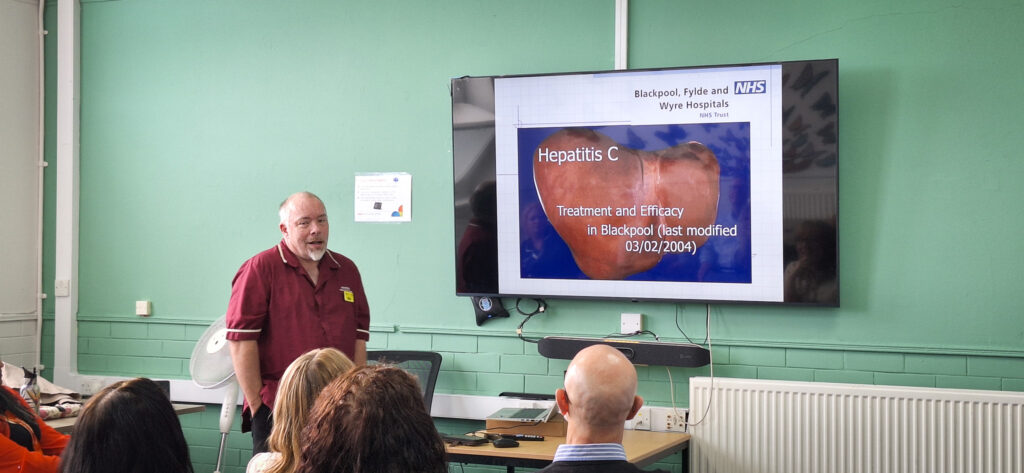
Emma MacFarlane, Clinical Lead at Delphi and a co-author of the paper, said: “It’s very rewarding for Delphi to have contributed to the evidence base around hepatitis C micro elimination.
“Our evaluation found hepatitis C positivity was linked to younger age of first drug use and many of our clients testing positive may have been infected for many years without knowing, so this really highlights the importance of opt-out testing, which we have also implemented at Spark Blackburn with Darwen.”
Although Delphi no longer delivers services in Blackpool, the publication recognises work that has continued to benefit local people. It also provides independent evidence of what can be achieved when services share expertise, work closely together and focus on improving access to care for people who are often at greatest risk of poor health outcomes.
For those involved, the paper is a welcome opportunity to look back on a significant public health achievement and the role that local partnership working played in making it possible. The findings will also help inform future work to eliminate hepatitis C in other communities across the country.